Because Where a Child Is Born Should Not Determine Whether They Survive Cancer
Today, a child diagnosed with cancer in North America has an excellent chance of survival. In much of East Africa, the opposite remains true. Childhood cancer is often diagnosed late, treatment is difficult to access, and many families abandon care because of distance, cost, or lack of specialized facilities. As a result, far too many children lose a battle they should have had the opportunity to win.
Shoe4Africa is building a solution: the first dedicated public children’s cancer hospital in sub-Saharan Africa.
Located in Eldoret, Kenya, on the campus of the region’s largest public referral hospital, the Shoe4Africa Juli Anne Perry Children’s Cancer Hospital will provide specialized treatment, isolation facilities, family support, training, research, and hope for thousands of children across East and Central Africa.
The Child Who Changed Everything
Her name was Beryl.
On New Year’s Eve 2018, a group of children gathered outside the Shoe4Africa Children’s Hospital to celebrate the installation of a small football pitch. Most of the players were cancer patients. Their captain and goalkeeper was a brave young girl named Beryl.
As the children ran, laughed, and played, it was impossible not to wonder about the odds stacked against them. Many were fighting diseases that children in wealthier countries survive every day. Yet simply because they were born in Africa, their chances were dramatically lower.
Standing on the sidelines watching Beryl lead her team, a question became impossible to ignore: Why was there not a single dedicated children’s cancer hospital anywhere in sub-Saharan Africa? Not one.
No specialized pediatric cancer center. No isolation hospital designed to protect immune-compromised children from deadly infections. No place built entirely around the unique needs of children battling cancer.
That day became a turning point. Beryl and the children she represented inspired a vision that would become the Shoe4Africa Juli Anne Perry Children’s Cancer Hospital.
This hospital exists because children like Beryl deserve the same chance at life as children anywhere else in the world.
Building on a Proven Legacy
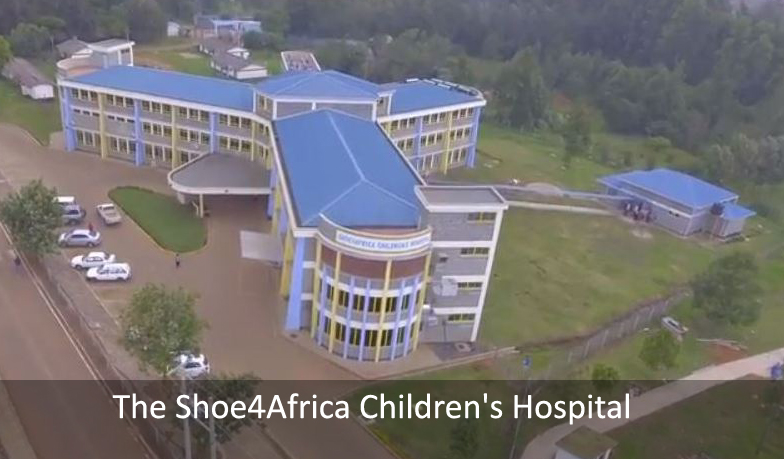
In 2015, Shoe4Africa opened East and Central Africa’s first public children’s hospital.
What began as an ambitious dream has become one of the region’s busiest pediatric facilities, treating children from across Kenya as well as Uganda, Tanzania, Rwanda, South Sudan, and beyond. By 2022, the hospital had celebrated its one-millionth patient. But one challenge remained unsolved.
Children receiving chemotherapy often require isolation from infectious diseases. Yet in overcrowded public hospitals, protecting vulnerable cancer patients is extraordinarily difficult. The need for a dedicated facility became increasingly urgent.
Why This Hospital Matters
The hospital has been designed specifically for children with cancer.
When complete, it will provide:
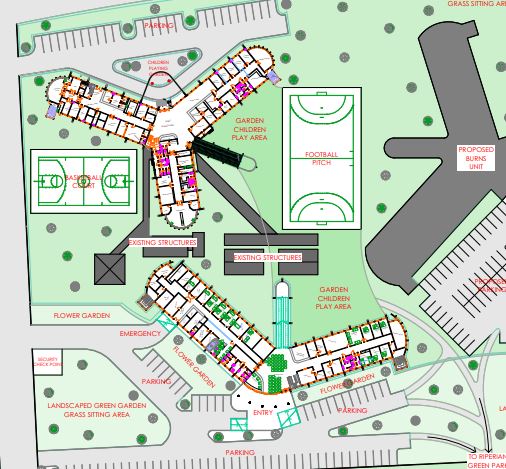
152 pediatric oncology beds, Chemotherapy infusion facilities, Isolation units, Outpatient clinics, Research and training facilities, Child-life therapy and playrooms, Family support services, Education spaces for children during treatment, Support facilities for healthcare professionals, Dedicated nursing and specialist care environments
Most importantly, it will provide a safe environment where children can receive treatment without the constant threat of life-threatening infections.
Honoring Juli Anne Perry
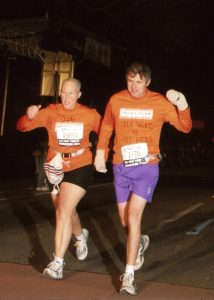
The hospital carries the name of Juli Anne Perry, a courageous cancer warrior whose life continues to inspire this mission. Following her passing, her husband Doug sought a way to create lasting impact in her memory. His generosity helped launch the project. Juli Anne loved Africa, believed deeply in helping others, and embodied resilience throughout her own cancer journey. Even while undergoing treatment, she completed the 2006 New York City Marathon. Her favorite words still guide this project: “Never, never, never give up.”
More Than a Building
This hospital is part of a much larger vision.
It will help:
Increase childhood cancer survival rates, Reduce treatment abandonment, Improve early diagnosis, Train future pediatric oncology specialists, Strengthen cancer research, Support families during treatment, Create a center of excellence for childhood cancer care in Africa
Every child deserves access to quality treatment regardless of where they are born.
Join Us
The Shoe4Africa Juli Anne Perry Children’s Cancer Hospital is more than a construction project.
It is a declaration that African children matter. It is a promise to parents that hope exists. It is a commitment to children like Beryl that they will not be forgotten.
Together, we can help build a future where a childhood cancer diagnosis in Africa is no longer a death sentence, but the beginning of a fight that can be won.
Help us build the first dedicated children’s cancer hospital in sub-Saharan Africa.
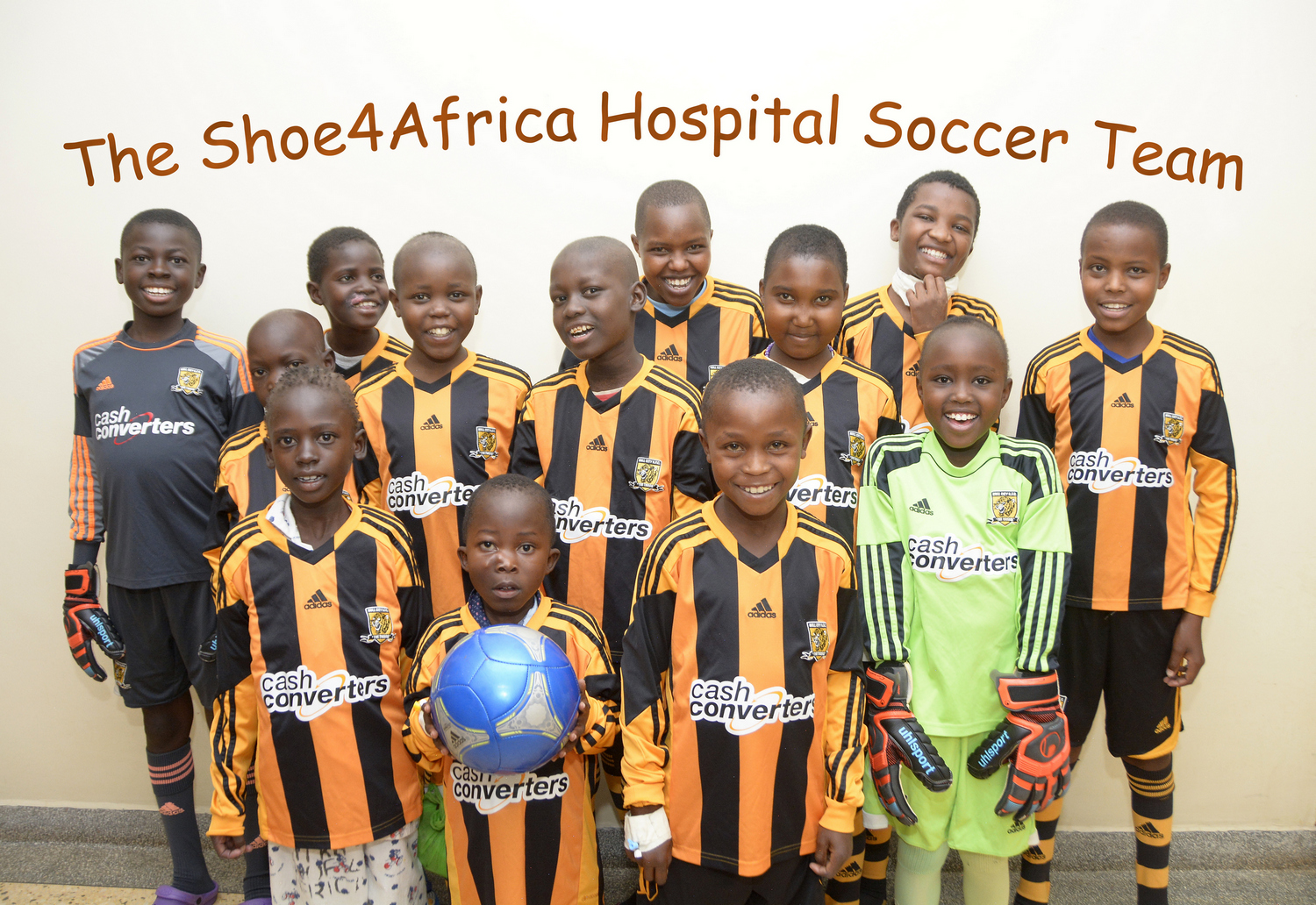
Team Shoe4Africa. We love you Beryl (in green).
Cancer Information & Support Hub
Cancer Is Not Always a Death Sentence
One of the greatest myths about cancer is that a diagnosis means there is no hope.
Today, many cancers can be successfully treated, and many patients go on to live long, healthy lives. For children especially, early diagnosis and access to proper treatment can dramatically improve outcomes. In high-income countries, more than 80% of children diagnosed with cancer are cured. While survival rates remain lower in many low- and middle-income countries, outcomes continue to improve as access to diagnosis and treatment expands.
The most important message is simple: The earlier cancer is found, the greater the chance of successful treatment.
Understanding Cancer
Cancer occurs when abnormal cells grow uncontrollably and interfere with the body’s normal function.
Cancer can affect anyone: Children Teenagers Adults Men and women
Not all cancers are the same. Some grow slowly, others rapidly. Many can be treated successfully when detected early.
Early Warning Signs of Cancer
If you or a family member experience any of the following symptoms for several weeks, seek medical advice:
General Warning Signs: Unexplained weight loss, Persistent fatigue, Unusual lumps or swelling, Persistent pain, Changes in bowel or bladder habits, Difficulty swallowing, Persistent cough or hoarseness, Unusual bleeding, Sores that do not heal, Significant changes in the skin or moles
Childhood Cancer Warning Signs
Parents should seek medical attention if a child experiences: Persistent fever, Frequent infections, Unexplained bruising, Bone or joint pain, Persistent headaches, Swollen lymph nodes, Weight loss, Extreme tiredness, White reflection in the eye, Persistent abdominal swelling.
Most of these symptoms are usually caused by illnesses other than cancer, but they should never be ignored if they persist.
Common Childhood Cancers found in East Africa
The most common childhood cancers include: Leukemia, Lymphomas, Wilms Tumor (kidney cancer), Retinoblastoma (eye cancer), Brain Tumors, Bone Cancers, Neuroblastoma
Cancer Treatment: What Are the Options?
Treatment depends on the type and stage of cancer and may include: Chemotherapy, Surgery, Radiotherapy, Immunotherapy, Targeted therapies, Palliative and supportive care
Many patients receive a combination of treatments. Modern cancer care focuses not only on treating the disease but also on supporting the emotional and physical wellbeing of patients and families.
Major Cancer Centres in East Africa
Kenya: Shoe4Africa Children’s Hospital, Moi Teaching and Referral Hospital, Kenyatta National Hospital, Kenyatta University Teaching, Referral and Research Hospital, AIC Kijabe Hospital
Uganda: Uganda Cancer Institute
Tanzania: Ocean Road Cancer Institute
Rwanda: Butaro Cancer Centre of Excellence
Community Resources. Kenya National Cancer Resources
The National Cancer Institute of Kenya coordinates cancer awareness, prevention, education, and national cancer policy. The National Cancer Control Program provides information on: Prevention, Screening, Diagnosis, Treatment, Survivorship, Palliative care
Emotional Support
Cancer affects entire families, not just patients. Families often benefit from: Counseling, Parent support groups, Survivor networks, Faith communities, Hospital social workers.
Community discussions among Kenyan caregivers frequently highlight the importance of emotional support, family counseling, and survivor groups throughout treatment and recovery.
Survivor Stories: Hope Lives Here
Every cancer survivor carries a story of courage. Some were diagnosed as infants. Others spent months or years receiving treatment. Many endured surgery, chemotherapy, and long hospital stays. Yet today they are: Students, Athletes, Teachers, Parents, Doctors, Community leaders…
At Shoe4Africa Children’s Cancer Hospital, we believe survivor stories are among the most powerful medicines of all. They remind newly diagnosed families that they are not alone and that there is hope beyond today’s diagnosis. One of the very first patients we treated after opening in 2015 was Lavinah in 2016 who continues to thrive! Another survivor Alice today works on our wards.
When to Seek Help
If you are concerned about symptoms in yourself or your child: Do not wait. Early diagnosis saves lives, reduces suffering, and often makes treatment more effective and less expensive. A conversation with a healthcare professional today could make all the difference tomorrow.
Prof. Gertjan Kaspers, MD PhD Head, Dept of Pediatric Oncology & Hematology, VU Amsterdam, Netherlands. Director of the Academy of the new Dutch Princess Máxima Center for Pediatric Oncology,
“Childhood cancer is the leading cause of death by disease among children in high-income countries. The same will become a reality in other countries such as Kenya, with the improved care of other diseases. However, cancer can potentially be cured in the far majority of affected children. A public childhood cancer center is crucial to care for these patients and to achieve higher cure-rates. I therefore strongly support the activities of Shoe4Africa to help realising such a public center, which would be the first in its kind in Africa”.
Dr. Terry Vik MD Professor, Pediatric Hematology-Oncology, Riley Hospital For Children At Indiana University Health.
“As our resources and capabilities improve, we should see up to 500 patients per year based on the population we serve if this hospital is built. The average length of stay of a newly diagnosed patient is 6-8 weeks, from the time they get admitted to hospital, diagnosed with their cancer, and receive their first course of chemotherapy. The new hospital will be totally isolation disease orientated. Currently, for the four most common cancers seen, lymphoma, acute lymphoblastic leukemia, Wilms tumor, and retinoblastoma, we save about 25% of those children. With better supportive care and new hospital space to reduce infections and abandonment of treatment, we could save over 50% of children. Our goal, once radiotherapy is in place in Eldoret and we implement these improvements, as many as 70% of children should be able to be saved with the therapies we can deliver. If we have a 100 bed hospital and can save up to 350 children per year as a realistic goal. Currently we save about 25-30 children per year in our 24 bed temporary space.”
Dr Festus Njuguna, Childhood cancer specialist at the Shoe4Africa Hospital. “There are 200,000 new cases of childhood cancer annually and 80% of these occur in Lower/middle income countries (LMIC). The LMIC’s account for a staggering 85% of all cancer deaths. The Cancers with poor outcomes usually require isolation treatment, which today is not possible given the current facilities (in Kenya). The new Public children’s cancer hospital is urgently needed.
DR Robert Einterz, is the director of the AMPATH Consortium and director of the Indiana University Center for Global Health. “A pediatric cancer hospital is a critical missing piece in East Africa.”
The Campus Map
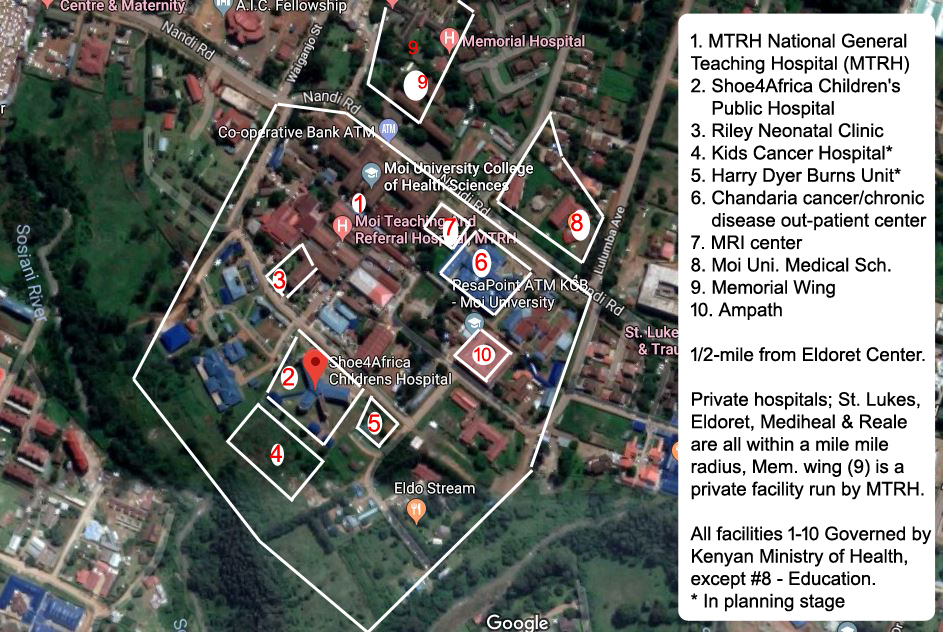
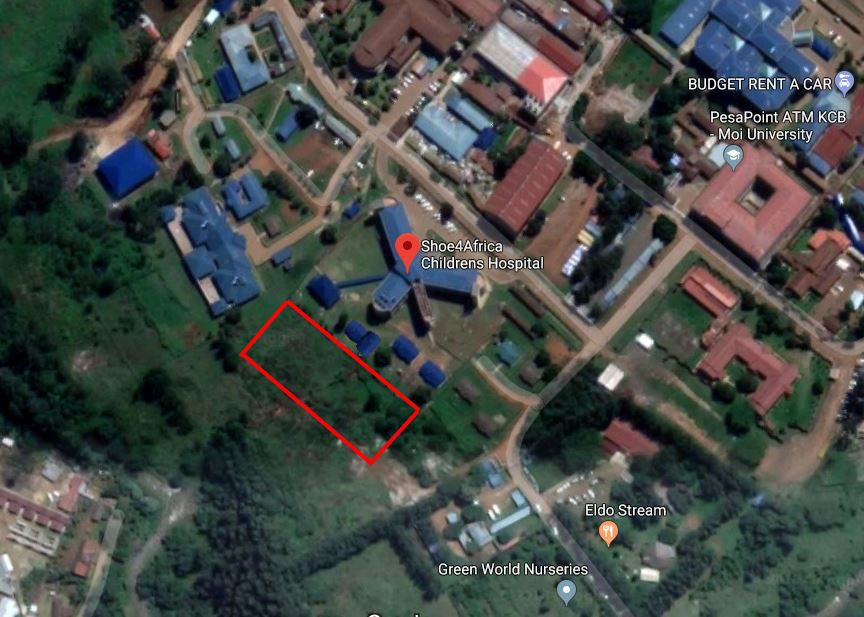
Eldoret, in Kenya, the fastest growing city, with an International airport, on the trunk road between Uganda and Nairobi, our site is situated right in the heart of the city center. Surrounded by a huge public health center, next to one of only two national referral general hospitals in Kenya, next to a Medical school, the location could not be better.
Most Common Pediatric Cancer Types in Kenya
According to available data, these are among the most frequently seen childhood cancers:
-
Leukemia (especially acute lymphoblastic leukemia) – one of the top diagnoses. People Daily+2Kutrrh+2
-
Non-Hodgkin Lymphoma – Burkitt lymphoma is especially common. Kutrrh+3People Daily+3ODRi News+3
-
Wilms Tumor (kidney cancer in young children) – seen frequently. People Daily+2Kutrrh+2
-
Retinoblastoma (eye cancer in young children) is also relatively more common compared to many adult cancers. Kutrrh+1
-
Brain and spinal cord tumors – though fewer cases are diagnosed, outcomes are often worse because of late detection and fewer specialized neurosurgical / radiotherapy resources. ODRi News+1
-
Cancer Staging
Staging is the classification of the extent of the disease of cancer. There are several types of staging methods. We will mainly rely on the below numerical system that will often be used to classify the extent of disease.
Stage 0 Cancer in situ (limited to surface cells) Stage I Cancer limited to the tissue of origin, evidence of tumor growth Stage II Limited local spread of cancerous cells Stage III Extensive local and regional spread Stage IV Distant metastases
Key Facts & Figures
-
Kenya diagnoses about 3,200 new cases of childhood and adolescent cancer each year. People Daily+3Kutrrh+3Nation Africa+3
-
Only about 20-30% of children with cancer in Kenya survive. In contrast, in high-income countries, survival rates often exceed 80%. The Borgen Project+2Kutrrh+2
-
A large number of childhood cancer cases are not diagnosed at all, or are diagnosed late, which reduces chances of successful treatment. Nation Africa+2Compassion Kenya+2
-
Many families are unable to complete treatment due to costs, travel, lack of specialized care, or lack of awareness. Kutrrh+2Nation Africa+2
Site of Cancer Origin
This classification describes the type of tissue in which the cancer cells begin to develop. Here are some common examples of site of origin classification:
- Adenocarcinoma: originates in glandular tissue
- Blastoma: originates in embryonic tissue of organs
- Carcinoma: originates in epithelial tissue (i.e., tissue that lines organs and tubes)
- Leukemia: originates in tissues that form blood cells
- Lymphoma: originates in lymphatic tissue
- Myeloma: originates in bone marrow
- Sarcoma: originates in connective or supportive tissue (e.g., bone, cartilage, muscle)
- Mixed Types: These have two or more components of the cancer.
-
Cancer Diagnosis
A biopsy (removal of tissue for microscopic evaluation) is preferred to establish, or rule out, a diagnosis of cancer.
Usually, a biopsy, along with with advanced imaging technologies, can confirm and locate the presence of cancer in its primary site and secondary sites if metastasized. A cancer’s primary site may determine how the tumor will progress; spread, or metastasize; and may also determine related symptoms that are most likely to occur. A secondary site refers to the body part where metastasized cancer cells develop to form secondary tumors.
The pathologist mainly gives a pathological grade to a tumor according to how malignant the tissue looks under the microscope that will finally confirm the presence of cancer. Cancers are additional classified according to stage.
Major Barriers & Challenges
-
Late diagnosis – Many children present at late stages. Symptoms can be mistaken for common infections. Kutrrh+1
-
Cost of treatment – Medicines, travel, hospital stays, and other costs are often prohibitive. Many families cannot afford full treatment. Nation Africa+1
-
Limited infrastructure & specialists – Few centers with full pediatric oncology capacity (e.g. radiotherapy, specialized surgery), and a shortage of trained healthcare personnel. Nation Africa+1
-
Treatment abandonment – Some children begin but do not complete treatment. This worsens outcomes. Nation Africa+1
-
Lack of awareness at community level, delayed referrals, and difficulty in accessing services in rural areas. Kutrrh+1
Further reading on pediatric cancer in Sub Saharan Africa
Global Hope link
Cancer in Children WHO link
Childhood Cancer WHO link
Aslan Project (Ethiopia) link